
International shipping is one of the most important parts of buying from China through Litbuy. After your items arrive at the Litbuy warehouse, the next stage covers choosing a shipping line, preparing the parcel, paying the shipping fee, tracking the shipment internationally, and receiving the package at your door in the US, UK, Australia, Canada, or Europe.
This Litbuy Shipping Guide explains how Litbuy shipping works, how parcel fees are calculated, how tracking updates work, what restrictions may affect your parcel, and what buyers should know before and after delivery. The overall shipping process includes warehouse packing, pickup by the logistics provider, security inspection, flight arrangement, overseas transit, customs clearance, handover to the local carrier, and final delivery.
How Litbuy Shipping Works
From warehouse storage to international delivery
After your items are stored in the Litbuy warehouse, you submit a parcel for international shipping. The parcel then goes through a structured multi-stage process before it reaches buyers in the United States, United Kingdom, Australia, Canada, Germany, France, or other international destinations.
Understanding these stages helps buyers track their parcels correctly and set realistic delivery expectations — especially during peak seasons or when customs inspections occur.
- Items are stored in the Litbuy China warehouse
- You submit the parcel and pay the estimated shipping deposit
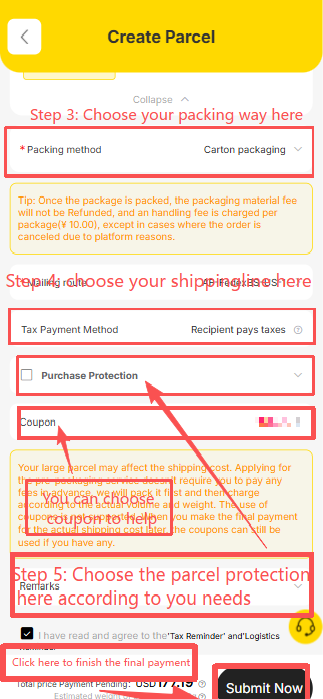
- The warehouse packs the parcel according to your chosen method
- The logistics provider picks up the parcel from the warehouse
- Security inspection and international flight scheduling begin
- The parcel is shipped internationally, sometimes with transit stops
- Customs clearance is processed at the destination country
- The parcel is handed to the local delivery provider (USPS, Royal Mail, AusPost, etc.)
- Final delivery is completed to your address
This matters because Litbuy international shipping is not a single-step delivery. It involves multiple handling stages, and delays may occur at several points — especially during customs clearance, flight scheduling, or local carrier processing. A pause in tracking updates does not always indicate a problem.

How to Choose a Shipping Line
Routes, availability, restrictions, and destination coverage
Different Litbuy shipping lines have different rules, pricing methods, destination coverage, and delivery features. You can check available routes and estimated fees through the shipping estimation page by entering the destination country, estimated parcel weight, and parcel dimensions.
Some routes may be limited by parcel size, item category, destination, or mailing restrictions. In some cases only one available line may appear, and in other cases no route may be available at all. If a parcel is too large, Litbuy recommends splitting it into smaller parcels. For special or remote destinations, route availability should be tested through the freight estimation tool before submitting the parcel.
- Destination country or region (US, UK, CA, AU, EU, Southeast Asia)
- Parcel total weight
- Parcel dimensions (length, width, height)
- Item category or brand classification
- Mailing restrictions assigned by the warehouse
- Special or remote delivery locations
Customs checks can be stricter in Canada and European countries. Commercial courier routes such as DHL and UPS may have a higher chance of triggering tax assessment compared to postal routes like EMS or SAL. Some Canada special routes may generate customs handling or clearance-related charges for heavier or higher-value parcels.
Choose your shipping line carefully based on the declared value, parcel weight, and destination — not just headline delivery speed.
How Litbuy Shipping Fees Are Calculated
Estimated deposit, actual billing, and fee adjustments
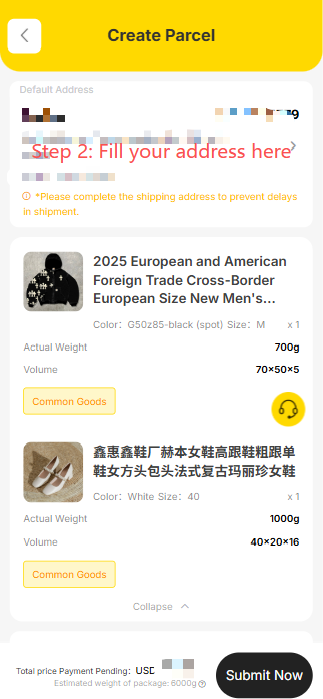
Litbuy charges shipping in two stages. First, it collects an estimated shipping fee when you submit the parcel. Then, after the parcel is packed and measured, the actual shipping fee is determined based on the final billable weight and dimensions. Differences are refunded or charged accordingly.
- Based on the estimated parcel weight you enter
- Based on the selected shipping route and delivery destination
- Charged as a deposit when you click Submit Now
- The warehouse measures actual parcel weight and dimensions after packing
- If the carrier does not change the billable weight, the warehouse result is used
- If the carrier adjusts the billed weight, the carrier's final result becomes the basis
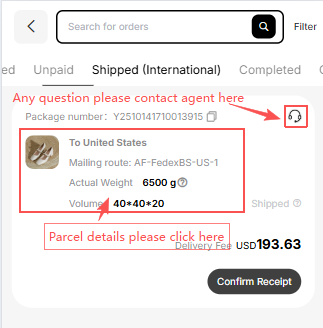
- Actual billed weight is visible in parcel details after shipment
- If the estimated fee is higher than the actual fee — the difference is refunded to your Litbuy balance
- If the estimated fee is lower than the actual fee — extra payment may be required
- For very small differences, Litbuy may absorb the cost rather than requesting extra payment
- Pay any balance request quickly to avoid delays in parcel dispatch
Actual Weight vs Volumetric Weight
Why parcel size matters as much as parcel weight
One of the most important Litbuy shipping concepts is the difference between actual weight and volumetric weight. Misunderstanding this can lead to unexpected shipping fee adjustments — especially for buyers ordering bulky but lightweight items like hoodies, sneaker boxes, or home textiles.
Actual Weight
The real physical weight of the complete packed parcel, measured on a scale after packing. This is the straightforward measurement.
Actual-weight-only billing applies to certain EMS, small-parcel, or economy routes. These routes suit items that are heavy relative to their size.
Volumetric Weight
Converts parcel dimensions into an equivalent weight using a formula. Used when a parcel is light but large in volume — common for shoe boxes, oversized clothing parcels, or bulky items.
The divisor varies by shipping line. Examples: UPS-F uses divisor 6000; DHL-B uses divisor 8000. Some EMS, air parcel, or SAL routes may not normally apply volumetric weight, though oversized parcels may still be reviewed differently.
Which weight is billed? Most Litbuy shipping routes charge based on whichever is greater: actual weight or volumetric weight. Certain postal or economy routes charge actual weight only. Always check the billing method for your selected route when shipping large, light items from Taobao, 1688, or Weidian.
Mailing Restrictions and Prohibited Items
What can be shipped, what is restricted, and what is prohibited
After warehouse inspection, Litbuy assigns mailing restrictions to items based on the product's brand, category, size, and other characteristics. When you submit a parcel, the platform uses these restrictions to recommend suitable shipping routes and reduce transport risk.
If you understand the transport rules and still want to remove certain restrictions, you can contact Litbuy online support to check with the logistics provider — but any resulting risk must be borne by the user.
- If one or more items in your warehouse have mailing restrictions, other items in the same parcel may also be affected
- Items with conflicting restrictions may need to be shipped in separate parcels
- Oversized items where one side is 70 cm or longer may require separate packing to reduce volumetric weight
Litbuy highlights liquids, medicines, food, DVD discs, powders, and gels as sensitive products. Small quantities may sometimes be shipped together with regular goods, but Litbuy clearly states that if customs seizes such parcels, the platform does not take responsibility.
Example: cosmetics with a single bottle at 100 ml or below and total parcel liquid capacity within 200 ml may be attempted, but buyers assume the risk. Sensitive items affect available shipping routes for the entire parcel.
- Weapons, explosives, and corrosive substances
- Dangerous chemicals and flammable materials
- Counterfeit currency or fraudulent documents
- Certain controlled drugs or narcotics
- Infectious or hazardous biological materials
- Items prohibited by postal law or customs regulations in the destination country
- Restricted or prohibited items that violate shipping rules are not eligible for compensation if seized

Shipping Tracking and Logistics Updates
How to track your Litbuy parcel and understand update gaps
After the parcel is shipped, you can track it from the Parcel > Details page in your Litbuy account. International logistics involves multiple transfer points, so tracking updates may be delayed and do not always refresh instantly. This is normal for international shipments routed through airline freight, transit hubs, and local carrier networks.
- Waiting for flight scheduling or airline cargo allocation
- Customs inspection at the origin country (China)
- Customs clearance delay at the destination country (US, UK, AU, CA, EU)
- Pickup or delivery delays by the local carrier
- Force majeure events — extreme weather, international disruptions, airline changes
A temporary pause in tracking updates does not mean the parcel is lost. In most cases it is still moving through the next logistics stage. If tracking has not updated for an unusually long time, contact Litbuy support to check the carrier status.
What "undelivered" means: Litbuy defines "undelivered" as a local delivery attempt that could not be completed — typically because the recipient was absent or a delivery problem occurred. The parcel was not signed for. In this case, contact the local post office or courier in your destination country, as the parcel may be held for pickup.
If your delivery address is wrong, incomplete, or unclear, the parcel may be returned, destroyed, or lost. In such cases Litbuy does not bear responsibility and insurance claims may not apply.
Fill in your address in internationally recognized English. Do not repeat house number information. Some destinations use parcel lockers or self-pickup systems — monitor website notifications and delivery reminders closely.
What to Check When Your Parcel Is Delivered
Pre-signing inspection, post-delivery issues, and time limits
Litbuy's delivery guidance is specific and applies to all buyers in the US, UK, Australia, Canada, Europe, and beyond. Following these steps protects your right to claim compensation if anything goes wrong.
- Check whether the outer packaging is intact and the box seal is still complete before signing
- Open and inspect the parcel contents in front of the courier if possible
- Make a note on the waybill if there is visible damage before signing
- If there is serious damage or a clear problem, refusal of acceptance may be appropriate
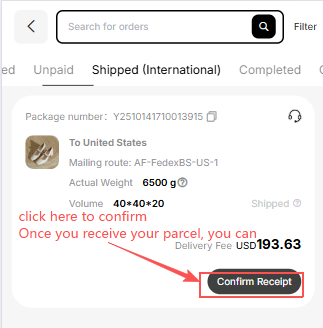
- Sign for the parcel after inspection — a standard signature marks the end of the logistics process
- If damage is found after signing without courier-witnessed inspection: keep the outer carton and original sealing tape
- Report to the local post office within two days of the official delivery time with invoice and item photos
- Contact Litbuy support so they can assist in requesting compensation from the post office
A normal signed delivery marks the end of the Litbuy logistics process. After normal signing, Litbuy does not assume responsibility for what happens afterward. Any problem discovered after signing must be reported within 72 hours, otherwise it may no longer be accepted.
Returned Parcels and Redelivery
Domestic returns, overseas returns, and redelivery costs
Not all parcels reach their destination on the first attempt. Understanding Litbuy's redelivery rules matters before shipping, because costs vary significantly depending on where in the shipping process the return occurs.
- If a parcel is returned because it does not pass China domestic safety inspection, Litbuy will contact you and resend the parcel for free
- No extra charge to the buyer for this type of return
- If the parcel has already been shipped abroad and is returned due to international safety issues, unclaimed delivery, unclear address, or similar causes — the user must pay the redelivery cost
- For some tax-free routes, paid redelivery may be available if the parcel cannot be delivered
- Once returned to an overseas warehouse, both return fees and redelivery fees apply
- If you refuse redelivery, only the return fee is charged and the parcel may be automatically destroyed
Many buyers only think about first delivery. Plan your address carefully and monitor delivery notifications to avoid overseas return fees, which are charged separately and can be significant for heavy or bulky parcels.
Customs, Taxes, and Clearance Responsibility
Declaration, recipient cooperation, and what customs controls
Litbuy prepares product name, quantity, and unit value details for customs based on the value entered by the user and the submitted item information. Declaring parcel value accurately is important — the declared value may also become the basis for claims if loss occurs.
Once a parcel reaches destination customs in the US, UK, Australia, Canada, or Europe, the recipient may be asked to provide invoices or customs documents. If the recipient:
- Cannot be contacted by customs
- Has an unclear or incorrect address
- Refuses to cooperate with customs procedures
- Refuses to pay required taxes or import duties
— resulting losses and consequences are borne by the recipient. Such cases are generally outside the compensation scope.
- Customs is not fully controllable by Litbuy or the buyer
- Taxes may apply depending on route, declared parcel value, and destination country
- Heavier or higher-value parcels may face a higher chance of tax assessment
- Buyers must cooperate with customs when contacted — delays from non-cooperation are not covered
- Incorrect declarations or recipient non-cooperation can void compensation eligibility
Compensation, Claims, and What Is Not Covered
What Litbuy shipping insurance covers and what it does not
International shipping contains uncontrollable risks. Litbuy does not bear compensation responsibility for losses caused by factors outside its control. Knowing what is and is not covered helps buyers make informed decisions before shipping and protects them from misunderstandings after delivery.
- Damage or loss caused by the recipient's own actions
- Customs seizure caused by recipient non-cooperation or incorrect declaration
- Claims submitted after the stated deadline
- Theft or loss after confirmed signed delivery
- Restricted or prohibited items seized by authorities
- Damage caused by the item's own nature (fragile items: eligible for loss claims only, not damage claims)
- Parcels with missing proof materials such as photos or invoices
- Recipient failure to sign in time, causing return or automatic destruction
- Losses from force majeure events: natural disasters, government actions, network disruptions, international conflicts
- Damage caused by weather, customs delays, or other uncontrollable logistics factors
- Dangerous goods and prohibited goods are not eligible for any claims
Fragile items: Even if enhanced packaging is selected, fragile goods only participate in loss claims — not damage claims. If you are shipping fragile items from China to the US, UK, Australia, or Europe, use the carton packaging or corner protector services and document the item's condition with photos before submission.
Shipping-Related Value-Added Services
Optional parcel upgrades that affect protection, size, and cost
Litbuy offers parcel-related value-added services that directly affect shipping preparation, parcel size, item protection, and sometimes the final freight cost. These are especially useful for buyers shipping fragile items, electronics, sneakers in original boxes, or bulky soft goods internationally.
Parcel Rehearsal
Simulates packing before official shipment. Get an early estimate of parcel size, weight, and shipping fee.
¥20 CNYWaterproof Packaging
Stretch-film wrapping protects the parcel from water and moisture during transit.
¥5 CNYMoisture-Proof Bag
Prevents items from getting damp or moldy during long international shipments.
¥5 CNYCorner Protectors
Paper corner protectors for outer boxes. Useful when the original product packaging condition matters.
¥5 CNYVacuum Packaging
Compresses bulky soft items like down jackets and home textiles to reduce parcel volume and shipping fees.
¥15 CNYVacuum packaging tip: Recommended for down jackets, blankets, and other soft bulky items. By reducing parcel volume, vacuum packaging can lower volumetric weight — which directly reduces international shipping fees on routes that bill by volumetric weight.

Warehouse Storage and Shipping Timing
Free storage period, fees, and item abandonment rules
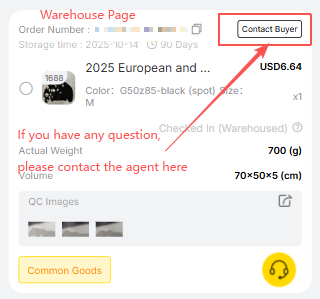
Litbuy provides 90 days of free storage starting from the "stored in warehouse" status. After that, storage fees apply. Buyers who plan to consolidate multiple orders before shipping should track their storage expiry dates carefully to avoid extra charges.
- 90 days free storage from the date the item is marked "stored in warehouse"
- After 90 days: storage fee of 0.5 CNY per item per day
- Maximum total storage period: 180 days
- If no parcel is submitted after 180 days, the item may be treated as abandoned
- Ownership of abandoned items may transfer to the platform after the maximum period
- Abnormal parcels without matching logistics information follow similar storage-period rules
Litbuy advises submitting parcels earlier and not waiting too close to the free storage deadline. If you are waiting for multiple items to arrive before bundling into one parcel, monitor each item's individual storage start date — each item's 90-day clock starts from its own warehouse arrival date.
Litbuy Shipping Tips for Beginners
Practical advice for first-time international buyers
Based on Litbuy's official shipping rules and service documentation, here are the most important practical tips for buyers in the US, UK, Australia, Canada, and Europe using Litbuy for the first time.
- Enter your delivery address carefully and in English — incorrect or incomplete addresses may result in failed delivery without compensation.
- Choose shipping routes based on parcel size, item category, and destination — not just headline delivery speed or the cheapest price.
- Understand whether your selected route charges by actual weight or volumetric weight — this significantly affects the final shipping fee for bulky items.
- Avoid sending too many sensitive items in one parcel — liquids, powders, and similar products can affect the entire parcel's route availability.
- Use Parcel Rehearsal (¥20 CNY) if you want a more accurate estimate before official submission — especially useful for large parcels with uncertain dimensions.
- Monitor tracking patiently — international shipping updates may lag behind real parcel movement by 24–48 hours or more during transit and customs stages.
- Inspect the parcel before signing whenever possible — open it in front of the courier and note any visible damage on the waybill.
- Report post-delivery problems quickly within the stated time limits — Litbuy requires reports within 72 hours of confirmed delivery.
- Track your warehouse storage dates — each item's free 90-day period starts on arrival, not when you submit the parcel.
Litbuy Shipping Guide Summary
Key points from all 13 topics at a glance
The Litbuy international shipping process involves multiple stages, each with its own rules and responsibilities. Here is a quick reference summary:
- 9-stage shipping process from warehouse to doorstep
- Shipping line availability depends on weight, size, and destination
- Fees charged in 2 stages: estimated deposit then actual settlement
- Bill by actual or volumetric weight — whichever is greater
- Mailing restrictions assigned per item by warehouse inspection
- Tracking may lag — a pause does not mean the parcel is lost
- Inspect before signing — report problems within 72 hours
- Domestic returns are free; overseas returns require paid redelivery
- Recipient must cooperate with customs in destination country
- Force majeure, customs seizure, and prohibited items are not compensated
- Value-added services (waterproof, vacuum, rehearsal) affect protection and cost
- 90 days free storage per item — submit parcels before deadline
- Enter your address carefully, choose routes wisely, track patiently
For the complete step-by-step guide on placing an order through Litbuy, see the How to Use Litbuy Tutorial.